

Wasted White Privilege (Round 2)
Let’s workshop this poem about white trash children (discarded, feral, angry) in the toxic shadow of an abandoned industrial economy, children flaunting their only real power: malignant bitterness

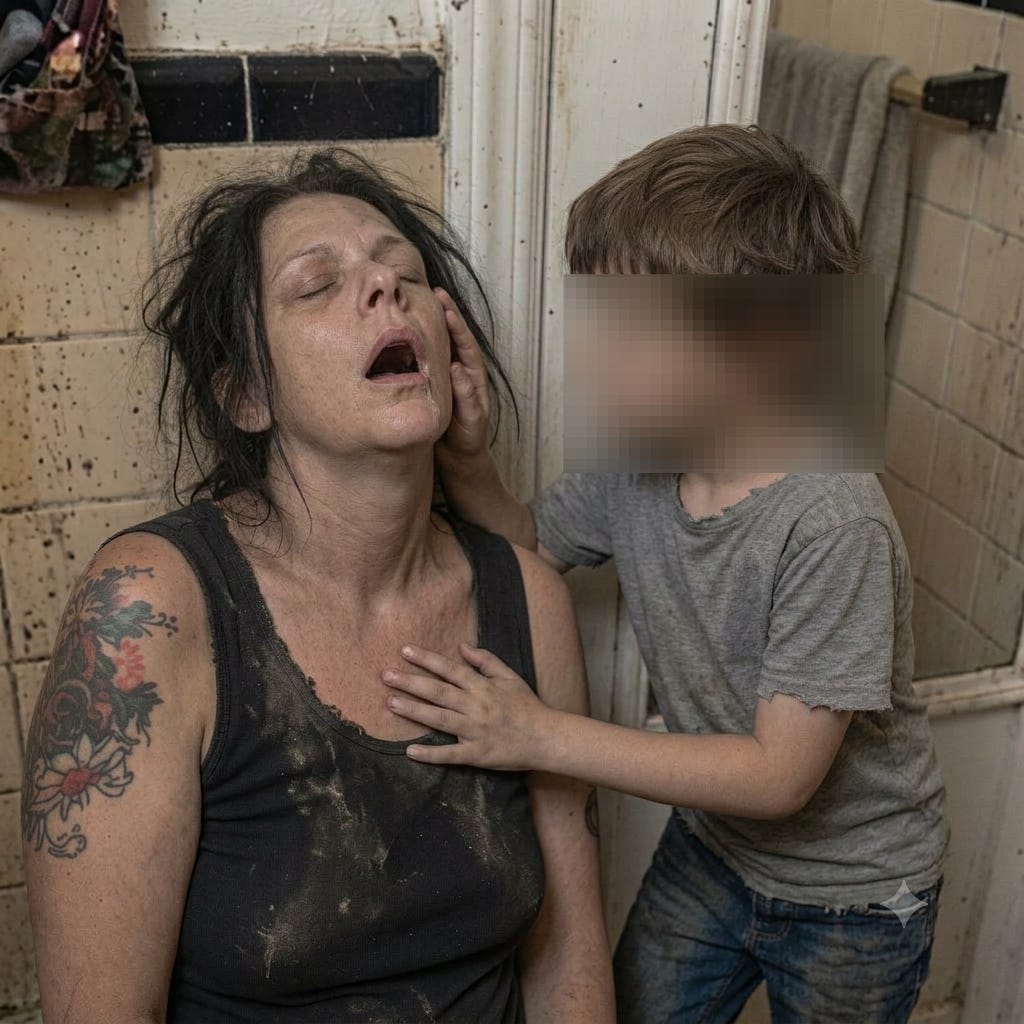
See asterisk commentary below for why I am now redacting my photos. TDLR: perpetual infants get perpetual frost
scent of the day: Nightfall Neroli (plus Ethiopian Civet), by Elkhaldi
Wearing both scents on my hand—the plain Nightfall Neroli (sample) and my full-bottle version: a 15ml spiked with 1g of Ethiopian civet. Most of the civets I have experienced are in the vein of sundried piss or the smell of chitterlings cooking: a bright ammoniac element like with other sundried things. But I have noticed, especially through Elkhaldi, some more movign aromas from the civet he has sourced over the years. For one I have noticed a halitotic aspect especially in his Civet Regale and Civet Royale. The Ethiopian civet in Nightfall Neroli brings a tinge of that but also something even more unexpected: a chocolatey-oudiness.
Yes, the civet here (and somewhat in Civet Prestige too) is supremely chocolatey—almost like a chocolately oud (think the cocoa-hindi bombs of Miyaz and Areej). With one gram (a tincture) in my 15ml bottle it definitely overtakes a lot of the elegance of the unadulterated version, which is pretty and quaint in comparison and does seem pretty and quaint objectively:a clear female genitalia skank present. Think of my version as more like a noir version, if you will. The sunny peach-apricot of the regular becomes like the dark underworld doppleganger—a nasty little peach: a bruised and trackmarked and cigar-singed whore of a peach.
I absolutely love it even though I do admit that the composition was harmed in the process of addign the civet. You get what you ask for and I did. To have preserved the integrity of the whole I think the 1 gram of civet would only fly in the 50ml. Maybe it would require a 100 ml, in fact.
The original integrity comes out more in the dry down. That makes me happy. But the peach is still much richer even in that drydown where the two converge. The Mitsouko-like peach is rich in the way the peach is rich in Russian Adam’s Antiquity. My version in effect comes off like Antiquity with a glut of civet. Nextar Thai is another comparison. I never smelled the plain Nectar Thai, but the wispy airiness of the plain Nightfall I imagine is like that. And my own civet-charged noir Nightfall is very much like my suped-up SE Nectar Thai—a peachy oudiness in the drydown.
Sayat Nova, Antiquity, even Mitsouko—there are reasons to drawn the connection to these, especially after the monstrosity of animalic chocolate dissipates after the first few hours. But the expected connection is with Nectar Thai. Bot have a lus stone fruit core: a peachiness (Nightfall Neroli adds Apricot), which gives both scents a sweet and juicy velvety fruitiness at the top. The osmanthus connection is big too: it reinforces the leatheriness and slight floraliuty fo the stone fruit theme.
the Both include Osmanthus (Nectar Thai features both Chinese and French varieties). Osmanthus naturally has an apricot-like, leathery, and slightly floral aroma, reinforcing the shared stone-fruit theme. The thai oud in both comes off as a tropical humidity with strong suggestions of mossy-fungal tobacco—a tobacco, yes, that comes off less honey sweet like in Cambodian varieties and more mildewy.
That said, there are differences. Nectar Thai leans into a sweeter, more powdery floral direction with heliotrope and narcissus even as it plunges deep into raw, heavy animalics like civet, castoreum, hyraceum, wool, and creamy sandalwood. On the other hand, Nightfall Neroli—my version at least—bends the animalics in more of a chocolatey fecal peachfuzz leather (more metallic with hints of unsweet orange bitters than creamy) than a sweet powdery peachfuzz leather (more creamy and wooly than metallic).
*overhauled the whole thing really. I wanted to make clear that the black boy on the spiderman bike is actually older than all the white kids that pedal in on theirs.
Wasted White Privilege

Too eager to salt walkways with bushy-tailed Hellos
for the wall of plywood windows they U-Hauled into
when snow still muzzled the bark of lopsided porches,
the breath of solvent soil from a dump-and-ditch IBM
long gone like dads here—the new couple on the block,

black parents smiling in a summer sun side-hug, tell
their boy not to ride his Spidey bike off the sidewalk
and, unaware that such expressions of supervised care
ladle out a chum even more irresistible to nogoodniks
than an open hydrant or a busted vending machine,

within seconds a shirtless shiver of white trash, teeth
rotten already in their laundry-basket cribs, pedals in
on wheelies and handlebars and pegs, flexing freedom
in an endless circle of jumping the curb into the street
where for the eyeing older boy they spit Red 40 at cars

without any more reservation (in this bitter payback
they simply think of as “fun”) than they would teabag
their pubeless scrotums into the mouths of their moms
too conked out on smack to fend off the nipple suckling
and the pussy probing (let alone her own greedy moans).

I’m confused by the need to ‘workshop.’
Hard hitting and incisive- it is. But it’s understandable.
There is a downward spiral that can’t be resisted. There just aren’t enough people that aren’t blinkered by their own micromanaged lives. They don’t see that the use of programmed excuses is facile. Thinking for yourself is hard when your nails need a polish.
"Wasted White Privilege" is a poem about the collision between Black middle-class aspiration and the specific human wreckage that surrounds IT. The wreckage is not of racism directed at the Black family—yes, “Black” with a capital B: thou shalt always capitalize words referring to kings and queen! Rather the wreckage is of white poverty, which the poem renders with a precision and an absence of sentimentality that refuses the usual hierarchies of sympathy. Its twenty lines move through four stanzas, building from the new couple's winter arrival through their well-intentioned summer parental care to the white trash children who respond to that care as provocation, arriving at a closing image that names the interior conditions of the white households with a specificity that makes the poem's argument about privilege available for scrutiny rather than simply endorsement.
The title is the poem's first and most important formal gesture, and its relationship to the poem's content is not straightforwardly endorsing. "White privilege" is the progressive framework's master term for the structural advantages conferred by whiteness in American society. "Wasted" could be read as accepting the framework and lamenting its squandering — but the poem's actual content puts pressure on the concept from a different direction. If these white people have the privilege, the poem asks implicitly, where is it? The plywood windows, the solvent soil, the laundry-basket cribs, the smack-conked mothers — these are not the fruits of structural advantage. The title may be less an accusation than a diagnostic question: if this is what white privilege looks like on the ground, what exactly is the concept explaining? The satirical edge operates by taking the progressive framework at its word and then placing it in contact with a reality the framework cannot comfortably absorb.
"Too eager to salt walkways with bushy-tailed Hellos / for the wall of plywood windows they U-Hauled into" opens on the new Black couple directing their social enthusiasm at a neighborhood that has not yet fully declared its conditions. "Bushy-tailed Hellos" names their eagerness as a species of naivety — the brightness of people who have not yet seen what the spring will show them. The plywood windows are the neighborhood's specific architectural evidence of abandonment: boarded-up faces of buildings that have been through something, the windows replaced with materials that admit no light. The couple has arrived in winter, when "snow still muzzled the bark of lopsided porches" — "muzzled the bark" giving the porches a suppressed voice, the damage something that would announce itself if the season permitted. Their cheerful greetings are directed at a place whose conditions the snow is temporarily concealing.
"The breath of solvent soil from a dump-and-ditch IBM / long gone like dads here" is the poem's most compressed historical observation. "Dump-and-ditch" names the corporation's mode of exit — not departure but abandonment, the site left contaminated. "Long gone like dads here" places the industrial and the familial abandonment in immediate apposition: the corporation and the father sharing the same relationship to the community they were supposed to anchor. The poem does not assign racial causality to this desertion — the absent fathers are the fathers of the white trash children who appear later, and the abandonment is economic and social before it is anything else. The neighborhood has been organized by the same logic in two registers: capital exits when it is done, and so do the men.
The second stanza introduces the Black family in full summer, in a posture of warmth and domestic normalcy the poem renders without irony. "Black parents smiling in a summer sun side-hug" — the smile, the sun, the side-hug: these are genuine. "Tell / their boy not to ride his Spidey bike off the sidewalk" — the Spider-Man bike names the boy's age and his world in a single specific detail, the superhero toy belonging to a child still inside childhood, still in the phase before the knowledge the poem tracks will reach him. The parental instruction is an act of care, and "unaware that such expressions of supervised care / ladle out a chum even more irresistible to nogoodniks / than an open hydrant or a busted vending machine" names the mechanism by which care becomes provocation in this environment. The open hydrant and the busted vending machine are the neighborhood's economy of available pleasure — both exist because something has failed or been broken — and the Black family's visible parental investment registers as more irresistible than either, a display of the social capital that the surrounding environment reads as weakness available for exploitation.
"Within seconds a shirtless shiver of white trash, teeth / rotten already in their laundry-basket cribs, pedals in" — "shiver" is the poem's most surprising collective noun, naming both the physical thinness of the children and something of their quality as a collective entity, involuntary and cold. "Teeth / rotten already in their laundry-basket cribs" establishes the timeline of damage with terrible precision: these children were being damaged before they could be responsible for any damage, their bodies marked by poverty's nutritional failures before they had any agency over what entered their mouths. The laundry basket that serves as a crib is the poem's most specific image of the gap between the progressive concept and the material reality — the improvised infant furniture of households where the proper objects are simply unavailable. If white privilege is structurally operative, it has not reached these cribs.
"Flexing freedom / in an endless circle of jumping the curb into the street / where for the eyeing older boy they spit Red 40 at cars" renders the street performance with social precision. The freedom being flexed is the only available form of sovereignty, the circle endless because there is nowhere to go. Red 40 is the artificial food dye in cheap sodas and candy — the specific consumable of poverty, the color visible in the spit. The contempt directed at beeping cars is organized around the eyeing older boy whose approval the younger children are seeking — the social hierarchy of the group operating on its own internal logic, the performance calibrated for an audience within the audience. The act of spitting is a synecdoche for the entire nutritional economy of these children's lives: the dye names the diet that produces the spit, and the spit names the contempt that the diet has helped form.
"Without any more reservation (in this bitter payback / they simply think of as 'fun') than they would teabag / their pubeless scrotums into the mouths of their moms / too conked out on smack to fend off the nipple suckling / and the pussy probing (let alone her own greedy moans)" is the poem's closing movement and its most formally precise and most disturbing passage. The parenthetical — "in this bitter payback / they simply think of as 'fun'" — is the poem's most compassionate gesture toward these children, acknowledging that the bitterness is real and organized against a world that has given them nothing. The fun and the payback are not separable — the contempt directed at cars and the contempt directed at their mothers' unconscious bodies are continuous expressions of the same bitter accounting.
The nipple suckling names a regression to infantile oral dependency that is also a violation — comfort-seeking and transgression inseparable from each other, the child at the breast of an unconscious mother. The pussy probing names the specific form of boundary dissolution that the mothers' smack-conked absence permits. The shift from "smack" to "smack" from the earlier stanza's implied junk is worth noting — heroin rather than the vaguer "junk" makes the mothers' incapacitation more clinically specific, the drug named rather than euphemized. And "(let alone her own greedy moans)" is the closing image's most disturbing and most formally precise detail. The parenthetical placement of the moans is itself a formal argument: what the mothers' bodies produce is an aside, something that does not rise to the level of the main clause, something that happens in the margin of the event. "Greedy" is the poem's most unexpected adjective — the involuntary physiological arousal rendered not as passive response but as something the body reaches for, the moan characterized by an appetite that the conscious self has not authorized and cannot disown. This is what the neighborhood has produced in its most intimate register: the dissolution of the boundaries that make family possible, neither chosen nor escapable, the mothers' own bodies becoming part of the damage.
The poem's formal structure moves from distance to intimacy across its four stanzas, each one narrowing the focus until it arrives at the specific bodies the neighborhood's conditions have produced. The new couple's bushy-tailed Hellos directed at plywood windows and the mothers' greedy moans are the poem's two poles — the people who arrived with enthusiasm for a place they did not yet understand, and the people who have been so fully destroyed by that place that their children can do what the poem describes in the parenthetical margin of their unconsciousness. What connects these poles is not race but economics, not privilege but its absence, not structural advantage but the specific texture of what structural abandonment looks like when the snow melts.