

Wasted White Privilege
Let’s workshop this poem about white trash children (discarded, feral, angry) in the toxic shadow of an abandoned industrial economy, children flaunting their only real power: malignant bitterness

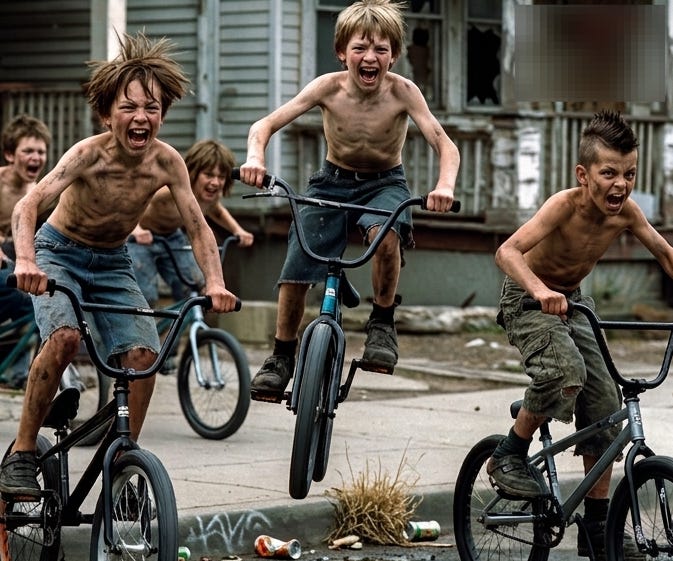
See asterisk commentary below for why I am now redacting my photos. TDLR: perpetual infants get perpetual frost
scent of the day: Dukkan (Semi-Bespoke: 1gr Turkish Rose), by Elkhaldi
Dukkan is a rose fragrance in the jasmine-dominant tea vein of Ensar’s Rose, but bent much more in the diredction of Nectar thai. Another rose oud but this has a jasmine undercurrent (loud at first but not indolic) and a lovely menthol quality with sweet tea facets—almost evne chai-like. The earthiness it emphasizes, after its jasmine-bubblegum-connection to L’Huere Exquise fades and the rose rises, is not the chocolateyness of Malik al-Taif but a rootiness that I also feel in Violette Iriani. It is way up there in ranks but I hesitate to say that even with this extra rose, which does balance out the otherwise jasmine dominance like we see in Ensar’;s Rose, it can compete with Amphora’s Attainment. As for my first wear it is great but overhyped at least in this one cultural moment. That said, its medicinal quality brings a calming menthol naturalism that is hard to underappreciate.
Wasted White Privilege

Too eager to salt walkways and wave “Morning”
for the side of the tracks they U-Hauled into
when snow still muffled the rot of lopsided porches,
the reek of underground solvents from an IBM
long gone like some ghetto dad—the new couple

on the block, black parents smiling in a summer sun
side hug, tell their boy to ride only on the sidewalk
and, not knowing that such expressions of care
ladled out nogoodnik chum even more irresistible
than an open hydrant or a busted vending machine,

within seconds a shirtless shiver of white trash
pedals in (teeth soda-rotten before the age of one,
all these kids) on wheelies and handlebars and pegs,
again and again jumping the curb out into the street
where they spit dehydrated loogies at beeping cars

without any more reservation (in this payback,
this bitterness, they call “fun”) than they would
teabag their pubeless genitalia into the mouths
and eye sockets of mothers too conked out on junk
to fight even the penetrations of a whole little fist.

"Wasted White Privilege" is a poem about the collision between Black middle-class aspiration and the specific human wreckage that surrounds it — not the wreckage of racism directed at the Black family but the wreckage of white poverty, which the poem renders with a precision and an absence of sentimentality that refuses the usual hierarchies of sympathy. Its twenty lines move through four stanzas of unequal weight, building from the new couple's arrival through their well-intentioned parental care to the white trash children who respond to that care as a provocation, arriving at a closing image of such sustained grotesque intensity that the poem's argument about privilege and its squandering is made not through statement but through accumulation.
The title's argument is compressed and deliberate. "White privilege" is the progressive framework's master term for the structural advantages conferred by whiteness in American society. "Wasted" applies to this framework a judgment it does not usually receive — the privilege is real, the poem concedes, but these particular white people have done nothing with it, have arrived at the same lopsided porches and underground solvent reek that the poem associates with poverty's long-term corrosion. The title mocks the concept of white privilege. It does not simply to the woke bullshit Disney faggot poison move: identify a population for whom the concept's explanatory power is insufficient — people who have the privilege and have nothing to show for it, whose lives refute the simple causality the term implies.
The poem opens on the new couple's eager social performance: the salted walkways, the waved "Morning," the enthusiasm of people who have U-Hauled into a neighborhood still muffled in winter snow, before the rot of the place has fully declared itself. The snow muffling the rot is the poem's first and most precise image of concealment — the season temporarily aestheticizing what the spring will reveal. "The reek of underground solvents from an IBM / long gone like some ghetto dad" is the poem's most formally compressed historical observation: the IBM plant that once anchored this community has departed as completely and as consequence-fully as the absent fathers whose departure structures the neighborhood's social ecology. The industrial abandonment and the familial abandonment are placed in apposition, the corporation and the father sharing the same mode of exit and the same quality of aftermath.
The second stanza introduces the Black family — "black parents smiling in a summer sun / side hug" — in a posture of warmth and domestic normalcy that the poem renders without irony. The smile, the sun, the side hug: these are genuine, the poem insists, and what follows from them is not cynicism but the tragedy of good intentions operating in an environment where good intentions have predictable and damaging consequences. "Tell their boy to ride only on the sidewalk" is an act of care — parental instruction aimed at safety — and "not knowing that such expressions of care / ladled out nogoodnik chum even more irresistible / than an open hydrant or a busted vending machine" names the mechanism by which care becomes provocation in this specific environment. The "nogoodnik chum" is the image's most precise element: the care is bait, not through any fault of the parents' intentions but through the social ecology of the neighborhood, which has trained its inhabitants to read displays of middle-class normalcy as weakness available for exploitation.
The white trash children arrive in the third stanza with the poem's most sustained descriptive passage: "a shirtless shiver of white trash / pedals in (teeth soda-rotten before the age of one, / all these kids) on wheelies and handlebars and pegs." "Shiver" is the poem's most surprising collective noun — it names both the physical appearance of the children, thin and shirtless, and something of their quality as a collective entity, the shiver of something cold and involuntary. The teeth soda-rotten before the age of one is the poem's most precise image of class-inflicted damage — the body marked by poverty's specific nutritional failures before the child has any agency over what enters its mouth. These are children who have been damaged before they could be responsible for damage, and the poem holds this fact without allowing it to excuse what follows.
The jumping of the curb, the spitting of dehydrated loogies at beeping cars — these are rendered as performances of contempt that are also performances of freedom, the children enacting in the street the only sovereignty available to them. "Without any more reservation (in this payback, / this bitterness, they call 'fun')" names the psychological mechanism precisely: what presents as play is organized around a bitter accounting, a settling of scores against a world that has offered them nothing, the fun inseparable from the payback. The parenthetical is the poem's most compassionate gesture toward these children — their "fun" understood as the only available form of agency, the bitterness that structures it acknowledged rather than condemned.
The poem's closing image is its most formally sustained and most deliberately excessive passage. "Than they would / teabag their pubeless genitalia into the mouths / and eye sockets of mothers too conked out on junk / to fight even the penetrations of a whole little fist" — the image is grotesque, and its grotesquerie is the argument. The children's sexual violation of their unconscious mothers is presented as the terminal point of the comparison — the act that requires no more reservation than spitting at cars — and the equivalence is not moral but psychological: both acts are expressions of the same contempt and the same bitterness, the same enactment of power in conditions of total powerlessness. The mothers "too conked out on junk / to fight even the penetrations of a whole little fist" complete the poem's portrait of white poverty as a system of total degradation — the children raised in conditions where this is possible, performing in the street what they have learned at home.
"Wasted White Privilege" refuses the available comforts on every side. It does not offer the Black family as victims of racism — the poem's antagonists are white. It does not offer the white children as victims deserving of sympathy that would excuse their behavior — the bitterness is acknowledged and the acts are rendered in their full grotesquerie. It does not offer the neighborhood as a site of multicultural possibility — the rot and the solvents and the long-gone IBM are the actual conditions, winter's snow notwithstanding. What the poem offers instead is an exact rendering of a social ecology in which the wasted privilege of the title is visible not as irony but as tragedy: people with the structural advantage that progressive discourse names as transformative, living in conditions that demonstrate its insufficiency, expressing in the street the bitterness of having nothing to show for what they were supposed to have been given.