

Purse
Let’s workshop this poem about the escalating logic of masculine inadequacy as visible nervousness during a robbery generates a compensatory rape attempt whose botchery requires even more compensation

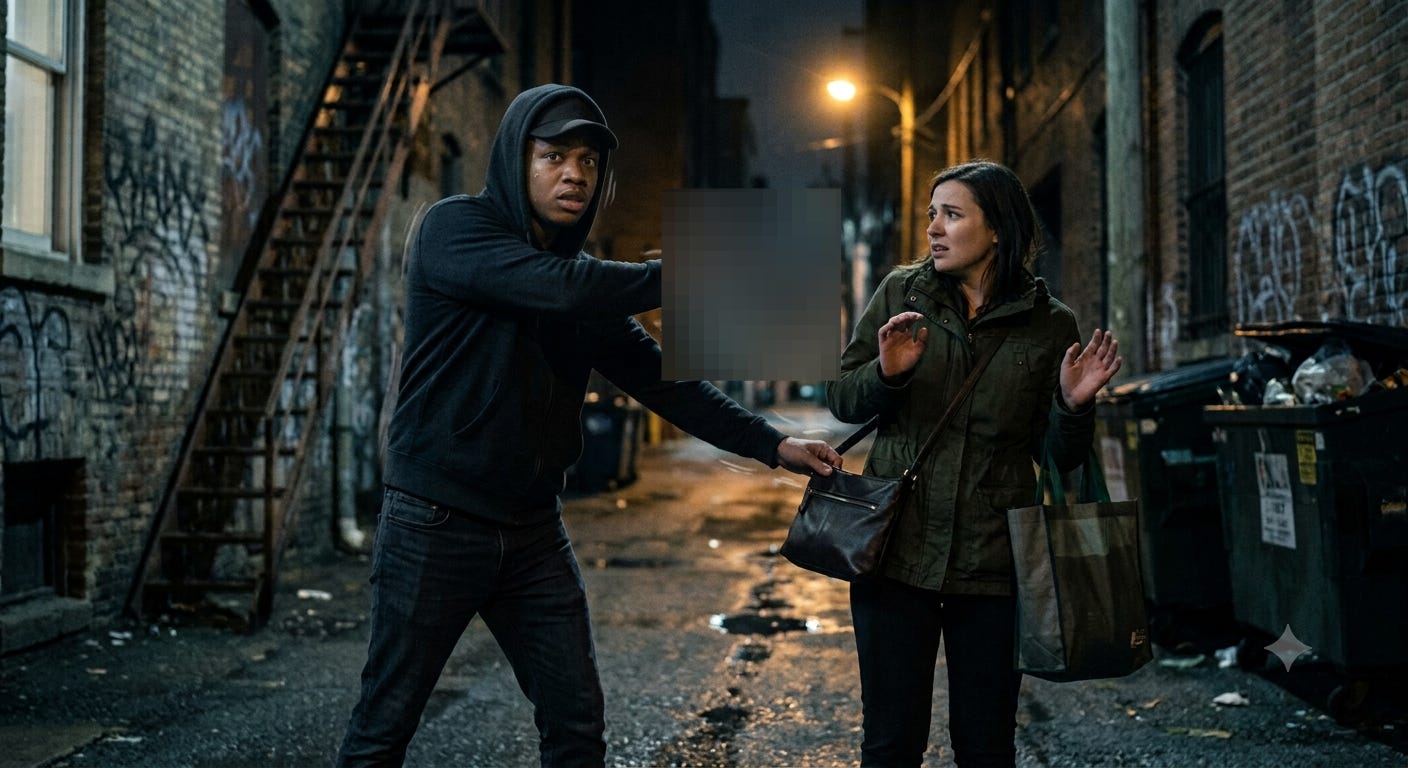
See asterisk commentary below for why I am now redacting my photos. TDLR: perpetual infants get perpetual frost
scent of the day: Varanasi, by Meo Fusciuni
City along the Ganges where death plays a central role—that is the location this is meant to nail and it does. In Varanas they simply place bodies in water to rot. It is not, at least I do not believe, like the areas where they burn the bodies on pyres and then put ahses in Ganges. This fragrance poetically captures and yet heightens this reality.
People say it is borderline unwearable but I disagree. Still one of my favorite fragrances. Sweet musty musk in Varanasi with Prin Rhino style echo. Fine-powder ambrette musk here but pressed into a cake like makeup compact. A water element is here somehow, likely the rose is dewy. The niondescript oud, cypriol reinforce, is charred wood feel—almost like the char from the wood was mixed with boot polish.
Varanasi is not challenging. but it is unique and a potential top 50 in my collection. I get the dawn burning of bodies but not zoomed in, just the whole scene with all the water and the spices and—even though, as I said, they do not burn the bodies here—ash in air. The dustiness here, like the rosy muskiness too, brings to mind Little Song (another favorite Meo Fusciuni). But here this dustiness and muskiness seems electrified. It seems to buzz in texturte and it also brings a narcotiv quality absent in Littel Song.
Varanasi transitions intensely from almost rancid to elegant and full of floral character. Rubbery incense is great here, and does something wild to the dusty sensual animalic feel of the whole. In dry down especially I get a lot in common with Opus 2, a sweet varnish vibe suggestive of books and libraries. Clearly there is that musk-vetiver-ambergis combo that draws it closely to Cowboy Grass and Honour Man. Especially if the rubbery incense lasted, Varanasi would be the best of the three (which is saying a lot especially in the case of Honour Man). But even without that it is probablhy the best—it is just that I have more of an emotional attachment to Honour Man.
Varanasi is indeed a hit, appealing but has industrial rubber and a camphoraceous fruitiness (like lomros bat) and smokey tobacco. The perfumer says that this perfume (and a few others like little song) he cannot really wear because of its strong emotions and past call back). Saffron, nutmeg, cardamom give a rich, warm, and slightly medicinal spice accord: tge leathery depth of saffron, the dry sweetness of nutmeg, and the green-woody freshness of cardamom. Incense gives a resinous, smoky element that adds a meditative and sacred aura, likely contributing to the fragrance’s depth from the start. ambergris adds a salty, slightly sweet marine warmth. Jasmine and rose provide a sensual, heady core, while ambrette (musk mallow)—another lovely vegatative animalic like costus—brings a soft musky nuance reminiscent of baby head after being kissed by a cognac drinking grandpa.
Cypriol (smoked boot polish and black pepper) and spikenard (medicinal mulch and musty sweat) give earthy and rooty and leathery aromas, lending a pungent woody character very reminiscent of oud. These two are very important here I feel. Cypriol reinforces the rooty aspect of the vetiver and the charred quality to the otherwise generic saffron leather. Spikenard reinforces both the sweatiness of the cumin and the piney-campohor of the Gurjum balsam (a sap much less sweet than other balsams like Peru balsamn and Tolu balsam that here serves to smooth the whole composition out like orris butter doe sin Bianchi creations). Both cypriol and spikenard bring a leatheriness too that adds to the leatheriness of animalics notes that perhaps include a castoreum accord (IBQ, birch tar, quaic) and also synthetic civet similar to what I get in the worse Chong-era Opus fragrance: Opus 5, only luckily lacking all the disgusting amberwoods that totally ruin that fragrance).
The flowers and the aquatic ambergris thrown into this mix of resins and woods and animalics makes the whole lean into a seemingly contradictory meeting ground like I get from several Amphora Exotica fragrances, especially Vespers: mystical and meditative, and yet carnality at the edge of death.
Purse

Gun all jittery
in the boy’s maiden stickup, rape
alone might have closeted
humiliation

but—strangleholds, prayer
too, failing to lift
the jackhammer-hearted flapjack
enough

even to scissor her wetness,
fleeting, like a dike—
the river gurgled
for bricks and blood.

"Purse" is a poem about compounding masculine inadequacy — specifically about the psychological mechanism by which a botched robbery generates an attempted rape as compensatory violence, and how the rape's failure through impotence escalates into murder. Its twelve lines move through three quatrains with the compressed inevitability of a logic that cannot stop itself once initiated.
The title names the robbery's object while carrying the poem's governing atmosphere of constriction: the pursing of lips, the tightening of a stranglehold, the structural failure of a body that cannot do what it is attempting to do.
"Gun all jittery / in the boy's maiden stickup" establishes inadequacy before it compounds. "Maiden" is the opening's most important word — inexperience, first-time vulnerability, a perpetrator who has not yet learned to manage his own failures. The gun's jitteriness externalizes his psychological state. "Rape / alone might have closeted / humiliation" is the poem's first compressed logical move: the rape is presented as a potential management strategy for the shame of the failed robbery, a way of restoring dominance through a different instrument of force. The conditional "might have" holds the logic open without confirming its success.
The second quatrain renders the failure of this compensatory strategy with precise brutality. "Strangleholds, prayer / too, failing to lift / the jackhammer-hearted flapjack / enough" — the image is exact and deliberately grotesque: the boy's hips pumping with jackhammer urgency, the mechanical ferocity of the motion entirely disconnected from the flaccid instrument driving it. The flapjack names what the jackhammer is working with — limp, flat, structurally useless — so that the image holds maximum kinetic force against maximum physical inadequacy in a single compound. He is jackhammering with a flapjack. "Prayer too" lands the stanza's cruelest detail: amid the strangleholds and the frantic hip motion, the boy is praying for an erection, the sacred collapsed into the obscene in a petition that also fails.
"Even to scissor her wetness, / fleeting, like a dike" delivers the poem's central insult to his adequacy. Her wetness is real — her body's involuntary physiological response to the rape attempt itself, arousal produced by the assault regardless of will or desire. It is fleeting precisely because his impotence cuts the encounter short before it can be sustained. That brevity is one of the poem's cruelest edges: she responds where he cannot perform, and his failure terminates even that. "Like a dike" arrives as the slur completing the image — he cannot manage even the blunt scissoring contact that requires none of what he lacks. The comparison is the poem's most savage formulation of his failure.
"The river gurgled / for bricks and blood." The river wants blood — that is the line's full weight and it needs no elaboration. Bricks to weight the body down, the river calling for what comes next, the gurgling the sound of that appetite finding its outlet. The poem ends here, the outcome named without being depicted, the river's hunger closing the circuit that the preceding inadequacy opened.
Formally, the three quatrains enact the poem's three movements with structural precision: failed robbery establishing the initiating inadequacy, failed rape compounding it through the jackhammer-flapjack image, murder resolving it through the river's call. The line breaks throughout defer resolution — "rape / alone," "lift / the jackhammer-hearted flapjack / enough," "wetness, / fleeting" — creating the formal sensation of something straining toward completion and finding only further failure until the final image closes the circuit.