

Modern Geometry
Let’s workshop this poem about a boy at the threshold of something larger than school, where the careful covering of a textbook begins to take on the pressure of a fate not yet named.

SCENT OF THE DAY: Vetiver Nocturne Absolu, by Bortnikoff
This belongs right there with Sir Winston given its tartness and ambergris glow. sweet grass like in chypre chiam but more tart here /has that green apple and khus combo we get in Qi Nan. opulent twist on vetiver that many will not read as vetiver not only because it it Rhu Khus but also given the white flowers and vanilla and spice (cinnamon cardamom)—extremely different style than Sultan Vetiver or Vetiver Insolent or Sycomore or Encre Noire etc. a strange semi-sweet-meets-minty-ashy oud in here. Experience with Ensar has allowed em to see how oudy this base is whereas before, associating oud merely with barn, I overlooked it. Apple jasmine tea vibes that is soft and round in dry down—the soft and round a combo of the furry-dusty oud and the creamy milky sandalwood. honeyed mentholated green apple from oud and jasmine and vetiver. jasmine here has pissy aspect. As for the green apple aspect, it is not Promise’s synthetic apple. This is more more real and exotic here, which I hard to do with apple. briney-pickly quality of africa olifant here slightly too—a plus. dirty natural peppery grass. diaper peed aroma but amounts to a more unisex vetiver. champaca infused sandalwood oil gives s bit of Chinese incense mall store that sells Buddhas and incense cones. combines creamy and tart and luminous and salty and dusty—a lovely feat. vetiver is dirty but more dirty grass than roots—although in drydown it does seem we get tot he roots. Weird rosey facets come out even though no rose is in here I believe. Boils down to a typical Bortnikoff ambergris scent:sun sparkling on the water ambergris—a great DNA, less artistic but realer than Tauer’s base while less artistic and less real than Ensar’s. The ambergris is beautiful and wonderful to have, but it is quite common across Bortnikoff’s oeuvre. You might say that this takes the ambergris base (think Sir Winston) and infuses it with this element: stewed pulp of dirty-sweet grass. sex and the sea saltiness in 8 hour drydown of vetiver nocturne. Is the Nocturne and allusion to Chopin?
Modern Geometry

Skin oil and fretful friction
had teased a fuzzy nap
along the spine of his textbook

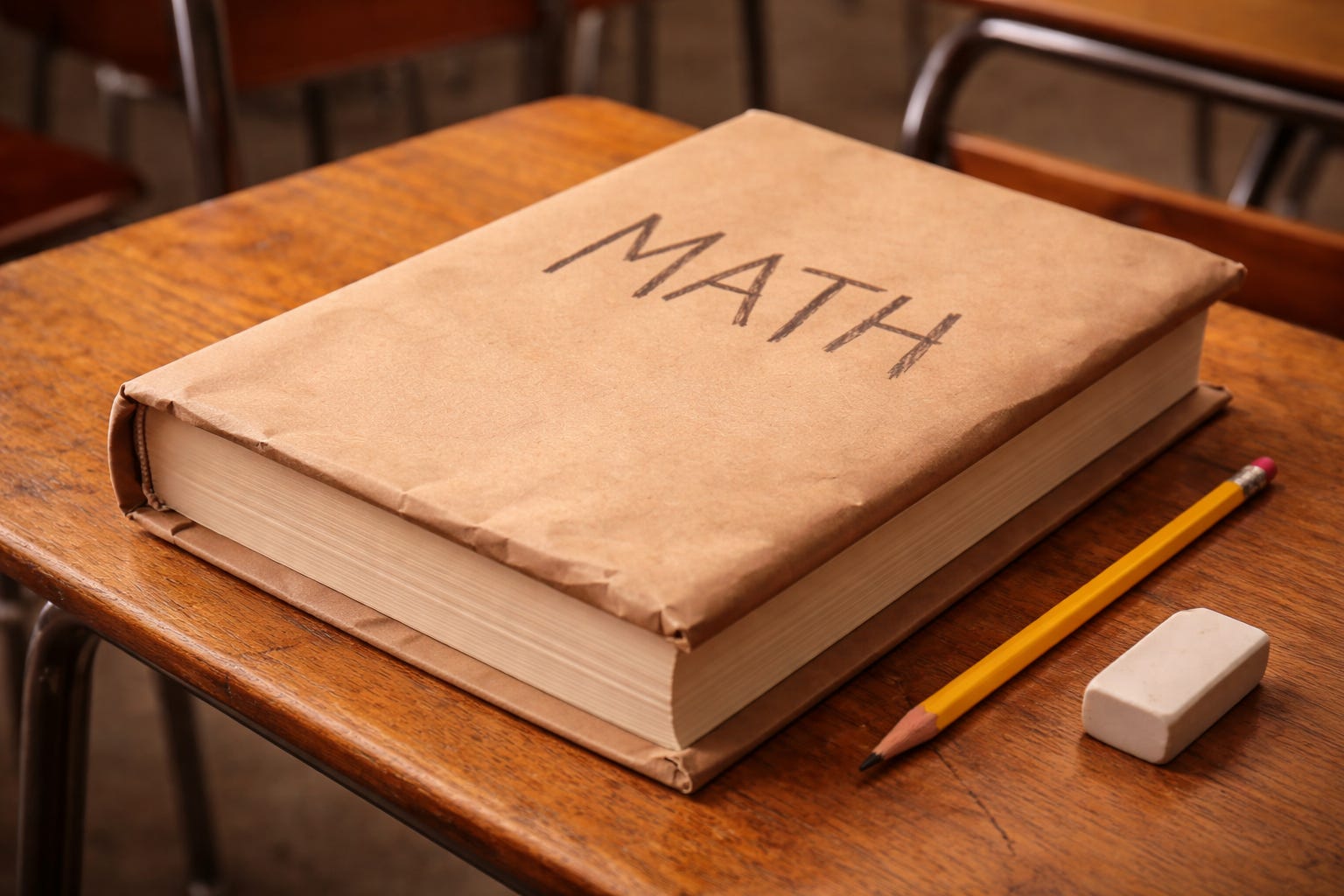
cover, a brown grocery bag
folded with triple-checked tension
into creaking sleeves

that required—for he would not cheat
the American rite—
not a single piece of tape.
“Modern Geometry” is a nostalgic poem about the tactile rituals of school life, using the act of covering a textbook with a brown grocery bag as a metaphor for discipline, identity formation, and a specifically American idea of doing things the proper way. The poem’s title is ironic and precise: the “geometry” in question is not mathematical but manual—the careful folding, creasing, and measuring required to make the cover fit exactly. What might seem like a trivial classroom habit becomes, in the poem’s treatment, a small initiation into order, self-control, and belonging.
The opening lines focus on the physical wear of use: “Skin oil and fretful friction / had teased a fuzzy nap / along the spine of his textbook.” The detail is intimate and exact. The book is not just an object but something handled constantly, worried at, pressed, and rubbed by anxious hands. The phrase “fretful friction” suggests both nervous energy and the repetitive motions of a student trying to keep things neat while living inside the restless atmosphere of adolescence. The worn nap on the paper bag shows how time and touch leave marks, even on something meant to protect the book.
The middle image shifts to the construction of the cover itself: “a brown grocery bag / folded with triple-checked tension / into creaking sleeves.” The language gives the act a kind of ceremonial gravity. The folds must be exact, the tension just right, the sleeves snug. The creaking paper evokes the sensory memory of thick grocery bags being bent into shape, a sound familiar to anyone who went through classrooms where this ritual was expected. The precision of the folding mirrors the precision suggested by the title, turning a mundane school task into a kind of craft.
The final lines introduce the poem’s key idea: “for he would not cheat / the American rite— / not a single piece of tape.” The refusal to use tape is what transforms the scene from simple description into cultural commentary. Covering books without tape was often treated as a small test of skill and patience, something learned from parents, teachers, or older siblings. Calling it an “American rite” elevates the act into a shared cultural practice, a minor initiation into rules, effort, and pride in doing something correctly without shortcuts. The insistence on no tape suggests an ethic of self-reliance: the cover must hold by the strength of its folds alone.
The poem’s humor lies in how seriously it treats such a small thing, but the seriousness is not entirely ironic. The careful folding becomes a symbol of a time when order, neatness, and doing things the right way carried moral weight, even in childhood. The “modern” in the title hints that this kind of geometry may no longer be common, making the memory feel both precise and slightly lost.
nostalgia poetry, school rituals, brown paper book covers, childhood discipline, American rite, tactile memory, classroom culture, metaphor of folding, everyday craftsmanship, coming-of-age details, modern geometry poem