


See asterisk commentary below for why I am now redacting my photos. TDLR: perpetual infants get perpetual frost
scent of the day: 2am, by mesOUD
Here we have perhaps the ultimate tobacco-ambergris fragrance, at least the ultimate tobacco-ambergris fragrance that goes in a Chinese apothecary direction. The rum and plum and warm spices (many elements of Chinese five spice), the mouth puckering tannins and medicinality, together here in 2am bring me back to an old memory I had long forgotten. 2Am, especially in the beginning where that herbal-booze impression is strong, gives me the smell of this liquid I bought from a mail-order catalog I—like so many other martial arts enthusiast in the 80s and 90s—used to be obsessed with: Asian World of Martial Arts. It was a thick physical color magazine. It might have had articles too even though its main function was to sell a massive inventory of martial arts related things. I had bought nunchuckus and a pair of sais from there. I bought ninja stars and sparing gear—the whole nine, wishing I could afford the Chinese wooden dummies.
One thing I bought from AWMA was this liquid in a plastic squeeze bottle with chinese characters on the front. It had a distinct smell and 2am is very much reminiscent of that. The ointment was for conditioning knuckles. I believe it was an ointment for “Iron Palm” training called: Dit Da Jow—an herb-infused liquid liniment used in traditional Chinese martial arts to condition bones, tendons, and ligaments, as well as to heal impact trauma from rigorous striking practice by promotes blood circulation and reduces swelling. It was raisin-like and clovey but with a vinous vibe that would have made me, if I wasnt just nine years old and had my mind now, of port wine. Indeed, its name literally translates as “fall-and-hit wine.” I cannot remember the characters but looking it up likely the bottle featured stylized Chinese characters for 鐵掌 (Tie Zhang / Iron Palm) or a classic logo of a striking hand. My strongest memory, my most persistent memory, is of the smell. It was a boozy raisin clove scent that I get here with 2am.
The combination of high-proof alcohol, fermented sweetness, medicinal herbs, and deep pungent woods—that is the root of the connection to 2am’s connection to Dit Da Jow. Instead of a generic perfume alcohol opening, 2am uses heavy, dark, thick liquor accords: rum, cognac. The fermented, molasses undertone of dark rum and the aged, oak-barrel heat of cognac—that must be what makes me think of that opening boozy slap from the Chinese liniment. Infiltered tobacco and cigar leaves have a dried-plum and raisin-like aroma when unlit. I get that in both products. And when you add 2am’s bitter cocao element, there is this sticky dark fruity paste effect (a pasty frutiiness like I get in many Elkhaldi by the way) and it really gives that feel I remember getting from Dit Da Jow: cinnamon and dates stewed in sour alcohol. Yes, there is a sourness, a vinous tartness, that runs through both. In 2am I think the explanation is how the fermented facets (especially from the oud and the cognac) work with the urinous-tangy edge of the castoreum.
Difference recipes are used to create Iron Palm liniments. But they all have an astringent medicinal-camphor edge designed to wake up the skin and move stagnant blood. I get that here definitley in 2am. The hemp and the skunk introduce volatile terpenes: green, bitter, sulfurous herbality. That is the centerpiece of the herbal connection between the two products. Many Dit Da Jow recipes include animal products or at least heavy-musk-like herbs to make the formula “penetrate the bones.” And so the animalic bend of the herbality is another similarity. The clove that 2am has really drives that herbality into a dental menthol halitotic direction—not too dissimilar to what I get from Ensar’s Tigerweood 91 but also very similar to what I get in the eugenol-heaby compounds (cinnamon, nutmeg, allspice, star anise) that is common in my Iron palm recopies (again, to help the product “penetrate the bones”). And the combo of all these—animalics (skunk, castoreum), greenery and spices (clove, cinnamon, nutmeg), and woods (various ouds)—really mimic the harsh bite of raw chinese roots and barks that must have been in the Iron Palm liniment.
2am is the only fragrance to awaken this forgotten memory of my experiences with Dit Da Jow. That suggests how unique it might be even though I have many tobacco fragrances. It comes with a spice and herbality more in the Royal Tobacco dimension. But 2am is more boozy and its dark tobacco is clear in more of the artisanal way we get from Tabac Dore or Sultan Pasha’s tobacco attars. The ambergris and the quality oud here really mark out the difference—not just on paper but in smell. Some oud varieties used here merge with the ambergris to create an oceanic feel, especially in the drydown, that Royal Tobacco does not have. Royal Tobacco goes to vanilla ash whereas this goes to sweet sea-salt crust.
This saltiness brings me to the difference between 2am and Dit Da Jow. 2am has much more of a salty brine from the ambergris. In the dry down, when so much of that boozy herbal connection drops away, we get a real salted leather impression—very mineralic and even metallic because of combo of castoreum and ambergris. The ambergris here in fact gives the best ambergris creations we get from Ensar a run for their money. I did not attend to that oceanic side of this perfume, a stark similarity to Black Gris, when I first wore it. The base of castoreum and ambergris really does feel like an Ensar. Also Dit Da Jow, while bringing to mind tobacco via clovey-raisin smells like we get in frags like History of Indonesian Oud, lacks 2am’s bold and overt tobacco note—like literal crushed cigar. While both are somewhat purple in olfactory hue, Iron Palm was a but more red medicinal whereas 2am—because of the strong rooty orris I get (unlisted)—is more violet tinted. It would not surprise me if both violet and orris butter are in here. This gives me another strong Ensar connection, sort of like a cross between Iris Ghalia and Purple Kinam—especially toward the latter since 2am gives me a buttered popcorn pyrazine nuttiness like I get in Purple Kinam (in both the popcorn, unlike with the pyrazine popcorn of Tabac Dore, seems smothered in a butter spiked with some sweet nectar that turns the hue purple. So yes, You are basically getting Ensar-level quality at a fraction of the price. It is wild when you think about it.
2am tobacco makes me appreciate Tabac Tabou by Perfume d’Empire—a much cheaper alternative to 2am. But Tabac Tabou is clearly working with inferior ingredients. Tabac Tabou is better blended. Tabac Tabou goes more in a dark honey over hay direction of elegance. 2am, on the contrary, goes into a medicinal-herbs and animalics over cigars direction of garage band lo fi. And again there is that orris purple rootiness and the stunning ambergris. The ambergris plus the tobacco is precisely what you would have thought Sir Winston would have smelled like.
*This is a portion of an ongoing mosaic poem called Made for You and Me. This portion is from the first installment: hive Being (Stanzas 2016-2020). More specifically, it is from the 2017 portion of that five-part work.
MADE FOR YOU AND ME 2: hive Being (Stanzas 2017—part 94)

the cheapest daycare

junkies envying your vascularity

“free kittins,” misspelled on the box, outside the supermarket

graffiti beautiful enough no longer to be a misdemeanor

barely off the streets but buying jewelry with the extra cash

never having land lines even when people still had land lines

drunks belligerent about not being drunk

that the dead haunt the living is one thing, but even
more disturbing is that they are reduced to doing so
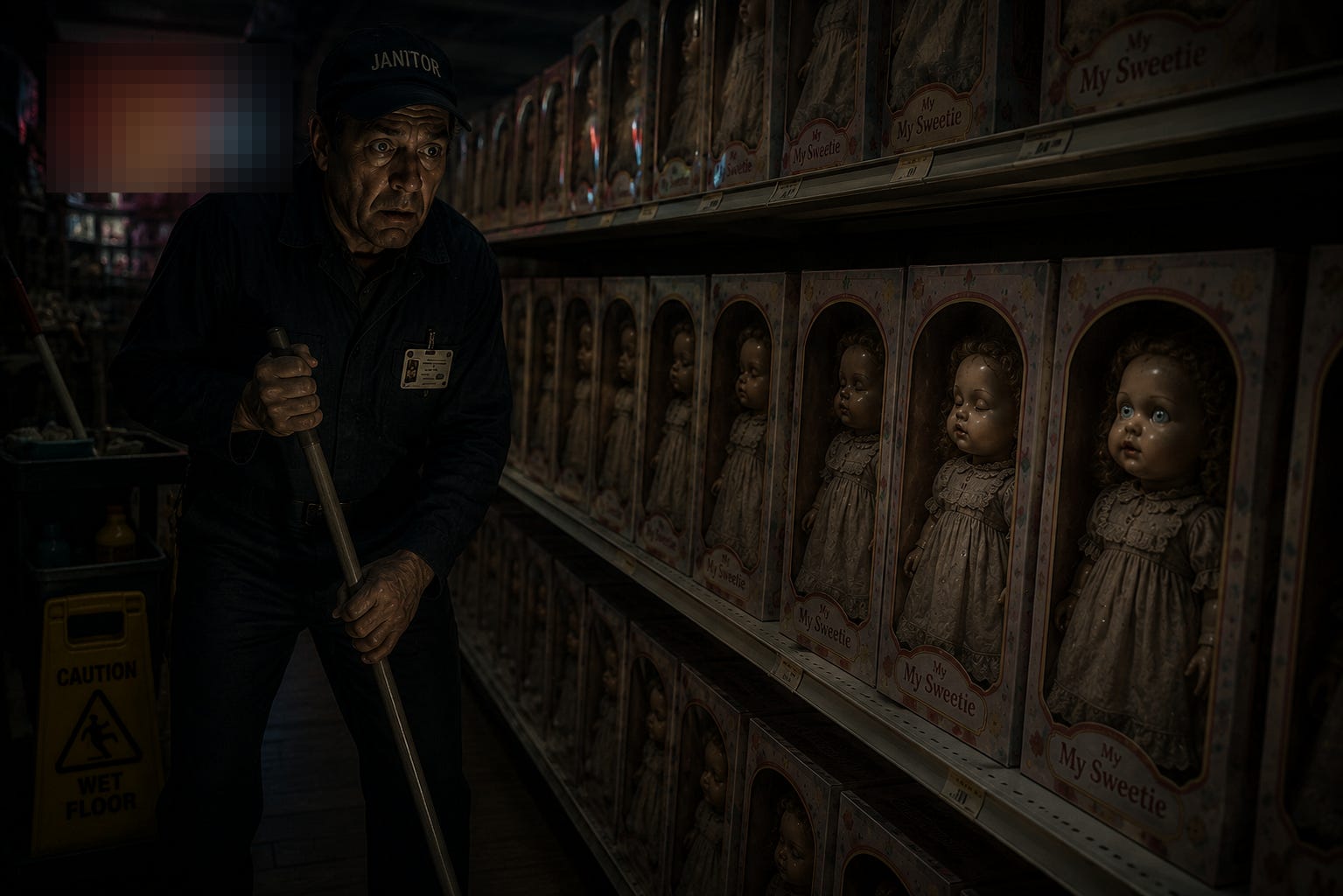
merely by making doll eyes blink for night janitors

“shyster psychic” is not a pleonasm like “tuna fish” or “pin number” if shysterism
requires conscious awareness of being a fraud (self-hypnosis can cut rather deep)—
and yet the bond remains as tight as renate and chordate if any awareness suffices

bird-feeder electrified for the quarreling squirrels

an amygdala event that divides your memory into before and after

ashamed enough of a depressive episode that you say you have the flu

okay with getting sex only because you are a fetish

doing a college major structured to shame you

life gets ruined when you agonize
over the inevitable subblivion—
and the same goes with love

killing war enemies is acceptable,
but taking a shit or piss on them
while huddled in a corner is not?

safe injection sites

cattle fed candies that did not make the cut and unsold leftovers from Halloween

robots counseling you to self-knowledge

it is important not to let false stereotypes get out of hand,
so—if we really are going to play the race game—always
remember which race commits the most school shootings

the scholar’s bane: the desire
to be right trumping the desire
to cultivate happy relationships

were we all psycho, we could play with our kids
without any need to dehumanize the people
that we wipe out or even just perform surgery on

the experimenter’s bad vibes may be preventing
the mystic from bending the spoon in the lab—
but what is most rational to believe even if so?

many waiters are willing to share tips
about how to avoid paying—walking out
during big parties, say—if only you ask

wondering, some days, whose life this is

shocked when mere fry cooks or janitors, seen
as too lazy to aspire for the American Dream,
prove perspicacious about art and fine wines

faking a need to hit the bathroom first,
and then banging back the half-full drinks
left behind after the restaurant gathering

arresting the guys that you grew up with, and then their children too

absconding with the sou-sou

town-hall rage

undressing her even as she warns that she cannot love you

the professor failed merely because she failed to open herself to vulnerability

medical emergencies causing you to swerve

parking-lot revenge rape after a heated town-hall meeting

survivalist-pullout manufacturing the very erosion of social stability feared

part of you desires that bond with your spouse destroyed when you came out as gay

freed from a state of mind through describing it in writing

live feeds of the sky in the monitor windows of survivalist bunkers

not just terror, straight anger, at the impermanence

creating art on a desert island

one-generation street drugs are killer

waking up to the local news reporting your apartment on fire

guidebooks to foreign destinations
better than the actual journey:
all anticipation, no bodily discomfort

the perks are good, no doubt—but it has to suck,
in the early morning hours at least, having won
top prize only because you self identify as black

deep in a hallucinogenic trip
or deep in a bout of depression—
worried you will be stuck this way

the burden of the call to act is an incentive not to recognize the problem

that gray-space of when to stop CPR

disappointment with the travel for which we so longed

sitting on her couch, the ghost tries in vain to hug his grieving wife

but what would become of you, your art, were you no longer despairing, neurotic?

the importance of mere lipstick
among the women in that city
besieged by snipers and bombs

in front of your dead friend’s house
tossing a ball, almost expecting him
to burst through the front door

grateful for the child you wished was never born

to show a strong wage gap between the two groups,
ignore the differences in their typical professions—
performance studies versus petroleum engineering

a losing struggle to stop slipping into daydreams about your new crush

that they do it only for the money does not prove that the work is exploitative

a goal of getting laid, in real life

loogie hocking banned in Hong Kong,
where throat clearing has become
almost a white noise in the smog air

unsure whether this is your last lap
or second-to-last, are you one
to run it as if it were not the last?

if you attend to how much everyone
checks their own face in mirrors,
would you check yours so much?

she has budded enough that you feel
uneasy with the old talk to her parents
of how their hands will soon be full

staying together for the kids
but then learning, when they leave,
all the strife was because of them

their release captured by news cameras
in the lot, some of the first-graders skip
as parents scan to find their child alive

not mailing that letter, weeks
in the making, after learning
that she has a husband

places where the mere attempt at GED classes
is a point of boast to older relatives, but something
that you hide elsewhere (not to seem too uppity)

show-me-where-this-is-illegal thinking
versus would-this-be-okay-
to-subject-my-mother-to? thinking

burying someone alive gives them time
to think about what they have done,
but will they use that time otherwise?

figuring out which of you gets which friends after the breakup

unable even to visit the place where you were—or think you were—once so happy

the view from even a balcony makes our activities seem antlike

scrutiny incited by that very gesture of looking down and away to evade scrutiny

waking up standing up

erectus ancestors who smiled at faces as infants were more likely to enjoy protections,
and so now infants smile at faces and, for extra reasons, adults—in anxiety too buried
to seem like anxiety—spot faces even where none exist (as in clouds and star clusters)

even if the light at death is just retinal flaring
or the overhead ER light, why must that be
incompatible with that light being Love?

counter narratives concerning how the protest was staged

sheepish about flaming the mouth of a pipe shared with someone with HIV

with slipping clicks, the dog snap-snaps at pussy spray
with the chomps of hose play, those throaty sounds—
that of the Hebrew “Chaim”: Hahyim, Hahyim, Hayhim

marijuana as a gateway drug
when resultant legal penalties
increase a teen’s negative stress

the more our economy becomes cashless
the more the preference shifts for drugs
that can be purchased with credit cards
Part 94 is the most tonally democratic installment of the sequence — its range spanning the cosmic, the comic, the grotesque, and the quietly devastating with an evenhandedness that refuses to signal which register deserves the most serious attention. Where earlier installments organized themselves around governing pressures, Part 94 achieves something closer to pure hive logic: every frequency at once, none subordinated, the sequence trusting its own accumulation to generate meaning rather than imposing it from above. The installment's distributed argument, insofar as it has one, concerns the relationship between perception and its blind spots — the things we cannot see because of where we are standing, the things we will not see because of what seeing them would require of us.
The sequence's most sustained philosophical thread concerns the relationship between knowledge and its costs. "The burden of the call to act is an incentive not to recognize the problem" is the installment's most compressed epistemological observation — naming the specific mechanism by which moral perception is blocked not by ignorance but by the implications of clarity. If you see the problem fully, you must act on it; if acting on it is costly, the mind has reason to not quite see it fully. The installment's "show-me-where-this-is-illegal thinking / versus would-this-be-okay- / to-subject-my-mother-to? thinking" extends this into ethical methodology: two different frameworks for evaluating action, one looking for explicit prohibition and finding its absence a green light, the other running the action through the filter of intimate human relationship. The gap between these frameworks is where most ordinary harm occurs.
"The scholar's bane: the desire / to be right trumping the desire / to cultivate happy relationships" and "the professor failed merely because she failed to open herself to vulnerability" belong to the same cluster — observations about the specific ways intellectual identity can become a defense against the very human contact that makes intellectual work meaningful. The scholar's desire to be right is not simply vanity; it is a form of self-protection that happens to produce real relational damage. The professor's failure is not intellectual but phenomenological: the classroom requires the same openness that any genuine encounter requires, and the armor of expertise can foreclose it.
The evolutionary psychology entries form one of the installment's most quietly ambitious clusters. "Erectus ancestors who smiled at faces as infants were more likely to enjoy protections, / and so now infants smile at faces and, for extra reasons, adults — in anxiety too buried / to seem like anxiety — spot faces even where none exist (as in clouds and star clusters)" traces a behavioral inheritance from survival advantage to perceptual compulsion to the specific adult anxiety that produces pareidolia. The sequence is complete and the logic is exact: we see faces in clouds because our ancestors who smiled at faces survived, and the same mechanism that protected them now generates the anxiety of finding intention and presence in randomness. "Were we all psycho, we could play with our kids / without any need to dehumanize the people / that we wipe out or even just perform surgery on" follows a related logic: the psychological distance required for violence and surgery alike is a feature of normal inhibition, not pathology, and its absence in certain states is what allows both the play and the harm.
The grief entries carry the installment's deepest emotional weight without announcing themselves. "In front of your dead friend's house / tossing a ball, almost expecting him / to burst through the front door" achieves its force through the specific physics of grief's denial — the body enacting the habitual expectation that the mind knows is impossible, the throw aimed at a return that cannot come. "Sitting on her couch, the ghost tries in vain to hug his grieving wife" inverts the usual ghost story: not the living haunted by the dead but the dead haunted by their inability to comfort the living, their presence useless at the moment when presence would matter most. "That the dead haunt the living is one thing, but even / more disturbing is that they are reduced to doing so / merely by making doll eyes blink for night janitors" deflates the supernatural entirely — the dead's only available instrument of contact is the accidental and the overlooked, the blinking doll that only the night janitor witnesses. The reduction of haunting to this is the entry's comedy and its horror simultaneously.
"Grateful for the child you wished was never born" is the installment's most compressed psychological reversal — the retrospective gratitude that coexists with the memory of its own prior absence, the parent who arrives at love through a path that included its explicit rejection. "Their release captured by news cameras / in the lot, some of the first-graders skip / as parents scan to find their child alive" places a school shooting's aftermath in a single image without naming the event — the skipping children and the scanning parents simultaneously, the ordinary childhood gesture of skipping made almost unbearable by its context.
"What would become of you, your art, were you no longer despairing, neurotic?" is the installment's most direct engagement with the relationship between psychological suffering and creative production — the artist's specific fear that the condition producing the work is inseparable from the work itself, that cure and silencing are the same event. The installment's "freed from a state of mind through describing it in writing" belongs to the same cluster as its counterpoint: description as liberation, or description as the only available form of it.
"Even if the light at death is just retinal flaring / or the overhead ER light, why must that be / incompatible with that light being Love?" is the installment's most theologically generous entry, and its generosity is formal rather than sentimental. The question does not claim that the light is Love. It asks why the materialist explanation and the theological one must be mutually exclusive — why the physical mechanism and the metaphysical meaning cannot occupy the same event. This is the sequence's most open-handed moment: not an argument for belief but a resistance to the closure that dismissal requires.
"The importance of mere lipstick / among the women in that city / besieged by snipers and bombs" is the installment's most morally precise entry about dignity under extremity — the word "mere" doing the entry's entire work by naming the dismissal it refuses. Lipstick is not mere in a city under siege; it is the maintenance of a self that the siege is trying to destroy, the insistence on a form of beauty that has nothing to do with survival and everything to do with remaining human. The entry does not explain this. It names the lipstick and the siege in proximity and trusts the reader to feel the gap between "mere" and what the lipstick actually is.
Formally, Part 94 achieves its most relaxed relationship with its own formal variety — the entries feel less curated than accumulated, as though the intelligence producing them has stopped deciding what belongs and is simply recording what the day yields. This relaxation is itself a formal argument: the hive in its natural state does not select. It receives everything, processes everything, makes honey from whatever arrives. The installment's final entry — "the more our economy becomes cashless / the more the preference shifts for drugs / that can be purchased with credit cards" — closes on a note of pure sociological observation, the underground economy adapting to the surface economy's technological shifts with the same pragmatic efficiency. The hive hums on.