

Clinical Excommunication
Let’s workshop this poem about a psychotherapist’s defensiveness toward a patient whose refusal to play along with the framework she has built her identity around is all the diagnostic she needs.

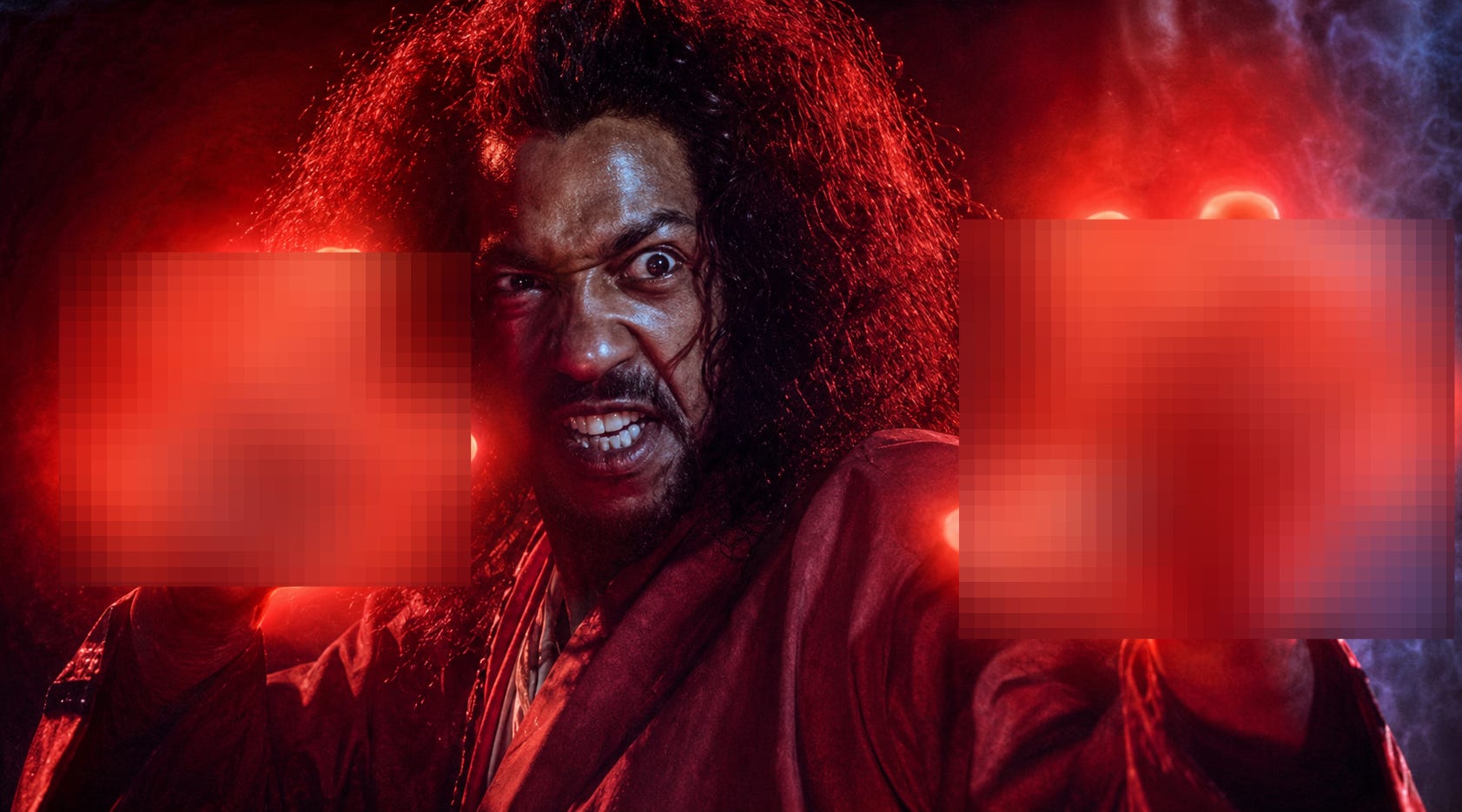
See asterisk commentary below for why I am now redacting my photos. TDLR: perpetual infants get perpetual frost
scent of the day: Kasturi Cola (Dense), by Elkhaldi
TDLR: oud-musk artisanal take on Kerosene’s Follow
One part Amouage Royal Tobacco spiced-olibanum-cola tobacco (maybe even some of its licorice too), plus two parts Miyaz Fleur Tabac or Areej Russian Oud assam-oud-cocao tobacco, plus three parts Kerosene Follow maple-liquer-chocolate coffee, plus one part Ensar Private Blend Himalayan-Siberian-Mongolian musk trifecta—that math will get you somewhere close to the mesmerizing Kasturi Cola Dense. Panning back a bit, this is in short an oud-musk artisanal take on Kerosene’s Follow—straight up.
From the jump I am hit with volatile roasted-coffee aromatics (pyrazines, bitter oils) and a caramelized edge that seems slightly burnt. Here we have dark-roasted realism with a boozy nuance—like those holiday chocolates that are filled with a liqueur and when you chew it all together creates almost a Kahlua nuance. There is cream in here too, the sort cream you would get in an ice-cream float. The cream is not sweet, however—and it is more about the texture: a milky warm texture. Indeed, the ice-cream seems infused with a dry leaf tobacco (very desiccated in texture and smoky and, now that I have spent more time with it, unhinged in the way of Sultan Pasha’s Tabac Grande—unhinged enough to seem to those who are not absolutely in love with tobacco to be overdosed in the way that I sometimes find Prin’s musks, like in Persephone and Indigo Nights).
This is not your fruity or high sugar cola. This is one with the creamy depth of vanillin and the spicy warmth of cinnamon (perhaps some clove and ginger too) and the depth of benzoin-like resins ramped up. The soda seems vintage in the manner of those chalky bottle cap candies. The chalkiness actually builds and comes with a coumarin warmth. That powdered-urine plume, buzzing, is from the musk and tonka. Yes, it could seem as you mix the float that there is a musk pod inside. Think tobacco-infused ice-cream in an old school fountain cola that has a chocolatey musk pod inside. Reads to me, especially the more coffee cream dense version I own, like a super artisanal take in Kerosene Follow, not just because both are photorealistic coffee frags but because both have in common even the maple-syrup-meets-smoked-molasses-meet-vanilla accord (the sweetness in both much more minimal than we find with the straight up maple-syrup-over-pancakes we get in Follows beastly sibling Followed.
That connection to Follow continues but fades once the oud and musk of the drydown take the center stage—components that Follow lacks completely. Indeed, the green throughline I get here from the oud —subtle but entrenched, and maybe even reinforced by an unstated cardamom—tilts Kasturi Cola arguably bit more towards Akro’s Awake, which wwith vetiver and cardamom is like Follow with a slightly green filture overlaid. But Awake is a less known coffee fragrance. I should also add that I get a spicy pepper—something close to chili pepper—in Kasturi Cola. That brings a connection to Arte Profumi’s Velvet Rouge, which is like a chili-pepper rendition of Follow—Follow, if you will, as seen through a picante-chili-pepper filter.
But when all is said and done and we pan back a bit and consider overall feel compared to nitpicky analysis, and when we also of course consider the quality oud and the lack of synthetics, Kasturi Cola’s closer sibling in spirit is Oud Luwak—equally animalic, only using civet instead of musk. Oud Luwak is less musky and less tobaccoy than Kasturi. It is also more peanut buttery and more smoky. It is farthest away, especially at a nose distance, than the aroma shared by Awake, Velvet Rouge, and Katsuri. But it is closest in quality ingredient and artisanal feel and animalic edge to Kasturi—these two being my top coffee fragrances of all time, beating the widely regarded ultimate benchmark: Follow.
As Kasturi Cola progresses, it seems as if we are evolving from a literal ice cream soda float into the bottle cap candies. The float like the candy is very adult though. Children would want something way sweeter. Yes, you might think of it as a sugar-minimal homespun tobacco-infused coffee ice-cream (very adult indeed) placed inside an artisanal cola (one from a mom-and-pop corner rather than some big factory, lower fizz like Pepsi and yet lower sweetness like Coke)—an artisanal cola with a musk pod inside.
The chocolate is big too here. It is based around the Sylheti oud, the same leathery-cocao oud we find used to epic proportions of vintage mastery in Wasif Reza’s Peau d’Orris Gold Edition. Sylheti oud is from Bangledesh. Given that Sylheti and Assam were historically part of the same ecological and political region before modern partitions, and given that the oud oils comes from the same species of aquilaria (malacennsis) growing in the same climate belt, and given the shared earthy-dark leathery-chocolate aroma (like a dank tobacco leaf), I tend to lump Sylheti in with Hindi oud in general. If there is a differentiating factor it is more dark chocolate earthiness with a green edge than fecal hide with a desiccated straw edge. But that distinction is not clean since so much post terroir pluck (mainly distillation method and storing) is relevant to the end smell. Vietnamese oud is inside Kasturi Cola too. It amplifies the recessive green aspects of the Sylheti but carries an incense vibe too—maybe slight red-fruit hints.
Now that I have tried the bright version too, which is merely the EDP version of the same fragrance formula, I know how to tease apart the difference. The dense is more like a coffee with a hit of cola syrup and with tobacco infused ice-cream on top. It might be better to describe, in effect, the bright version—which brings much more bubbly fizz, uplifting and effervescent—as more the cola (think: old-fashioned soda-fountain soda) and this dense version as more the creamier coffee version. Indeed, in the bright version the peppery-citrus element (perhaps from an unlisted elemi) comes out more, which further drives the Velvert Rouge connection since that fragrance contains mandarine orange. It might be a stretch to call the cola in the bright version an orange soda but I can see that somewhat.
Because of Kasturi Cola’s things strong resemblance to Kerosene’s Follow (so close people will not smell the difference and many will smell both as maple syrup and get from both this sort of Guy Fieri Americana coffee-refill diner association), it can be easy for artisanal head who have moved beyond niche to write off. But time must be spent with this one. Still, I would have liked this to have been framed more as a musk fragrance, such that the soda and coffee and chocolate elements actually served to bring out such elements of a musk—presumably a Mongolian musk would be best for that task. But I do not know about this assessment. Because today on my second solid wear I really am feeling the musk.
Despite all the colorful images I get, I was a bit disappointed in my first wear. Especially from the atomizer all I got was Kerosene’s Follow. And perhaps by some sort of association I could not shake the perception of screechy synthetics that are not here. And even though I knew there were none, I still got the sense that this was a rush job. Plus it felt just way too gourmand for my liking. For those reasons, and plus given that nearly everyone in the Facebook groups sold this as soon as they got it, I figured I would eventually sell to. But man, my second experience has been awesome. It no longer feels like a rush job. My suspicion that it needed to settle was definitely true in this case. The musk is great. The tobacco is unhinged but in the best way! The naturalism of the coffee is unmatched—this and Oud Luwak really do beat Follow, which was perhaps already beaten in the niche space by Velvet Rouge. Yes, its gourmand character is clear but it—like Oud Luwak—is one of those fragrances that humble you down to someone more reluctant to make sweeping claims about a whole category.
The dark-cafe gourmand element (maple syrup and mocha, terpenic cola and coffee ice cream) slowly peels away until we are left with a signature agarwoodiness all artisanal heads cannot get enough off—only here it is cocao-coffee twinged until the fragrance is no more and here the sappy viscosity becomes dusty, like the impression both of cigarillo ash and even dried espresso dregs that form an eyeshadow-like powder on the inside-bottom of the cup. This is the ultimate winter fragrance. I only really spray on my arms because I wear perfume like a scholar and coach, rather than an enjoyer and doer—that has always been my life as a writer and professor. But man, I can imagine this sprayed on the bare chest under all the winter layers—crazy!
Clinical Excommunication

To avoid giving the psychoanalyst
the required mommy-daddy answers
is to be that guy

who does not drop even under
Reverend Sho’Nuff’s holy-ghost hand,
that spoilsport

who refuses to bark
for the mall hypnotist—and so
the notepad scribble: “sev antisoc.”

"Clinical Excommunication" is a poem about the coercive grammar of therapeutic and institutional interpretation — the way certain professional frameworks demand a particular kind of self-disclosure, and penalize those who withhold it not by engaging with their refusal but by converting it into a diagnostic category. Its nine lines move through three tercets with comic precision, deploying two extended analogies before arriving at the clinical notation that retroactively names what the speaker's resistance has been classified as. The poem's argument is compressed into its title: excommunication is a religious act, the formal expulsion of a member who has failed to conform to doctrinal requirement. The clinical setting, the poem insists, performs the same operation under different vocabulary.
The governing analogy structure — psychoanalyst, Pentecostal revival, mall hypnotist — is the poem's central formal achievement. Each figure represents a system that requires the subject's surrender as proof of the system's validity. The psychoanalyst needs the mommy-daddy answers: the stock narrative of parental origination that confirms the theoretical framework before the session has properly begun. The Pentecostal reverend — "Reverend Sho'Nuff," whose name carries its own freight of performative authority — needs the congregant to fall under the holy-ghost hand, to drop as physical evidence of the spirit's presence. The mall hypnotist needs the subject to bark, to perform the loss of autonomous will that justifies the whole enterprise. In each case, the subject's non-compliance is not interpreted as evidence that the system may be limited or wrong. It is interpreted as evidence that the subject is deficient — a "spoilsport," a resistant case, a pathology.
"Reverend Sho'Nuff" is doing more than comic work. The name evokes the villain of the 1985 martial-arts film "The Last Dragon," a figure of theatrical self-proclaimed authority — "the master" — whose power depends entirely on others' willingness to recognize it. Applied to the Pentecostal revival context, the name quietly argues that the revival's spiritual authority and the villain's martial authority operate by the same logic: both require the crowd's performed submission to sustain the performance of power. The speaker who does not drop is not failing spiritually; they are declining to participate in a theater that requires their body as a prop.
The mall hypnotist comparison is the poem's most democratizing move. By placing the psychoanalyst in a sequence that runs through a Pentecostal revival to a mall hypnotist, the poem performs a deliberate bathos — a descent in cultural register that is also an argument about structural equivalence. The psychoanalyst operates in the most credentialed and theoretically elaborated of the three frameworks; the mall hypnotist operates in the least. But the demand each makes on the subject is identical: surrender your autonomous interpretive authority, perform the response the system requires, and thereby validate the system's power. The poem does not argue that psychoanalysis is as intellectually thin as mall hypnosis. It argues that the specific demand for compliance, and the specific penalty for non-compliance, are structurally the same across all three.
The poem's punchline — "and so / the notepad scribble: 'sev antisoc.'" — is where the argument lands with its full weight. The abbreviation performs the excommunication: "severe antisocial" rendered in the shorthand of clinical documentation, a notation made not because the speaker has displayed antisocial behavior in any meaningful sense but because they have declined to provide the responses that the framework requires. The "notepad scribble" is the clinical equivalent of the excommunication document — the formal record of failed compliance, converted into a diagnosis. That it is a scribble matters: this is not careful clinical observation but the quick notation of professional irritation, the diagnostic category deployed as punishment for the subject's refusal to be legible in the expected way.
The title's "excommunication" holds the poem's deepest irony. Excommunication is supposed to name a genuine breach — a heresy, a departure from the community's essential doctrine. What the poem exposes is that the breach here is not doctrinal but procedural: the speaker has not denied the validity of psychology or the existence of childhood influence, has simply declined to produce the expected narrative on demand. The clinical framework, like the religious one, cannot distinguish between genuine dissent and the refusal to perform. Both get the same notation.
Formally, the three tercets mirror the three analogies with elegant economy. Each tercet introduces a figure of institutional authority and the specific performance that figure demands, building a cumulative case before the final tercet delivers the verdict. The enjambment is precise — "and so" at the opening of the final tercet functions as a logical connective, the conclusion of an argument the poem has been building, before "the notepad scribble" arrives as the punchline that is also a diagnosis. The colon before the quoted notation gives it the weight of evidence — this is the record, the document, the excommunication made legible in four characters of clinical abbreviation.